
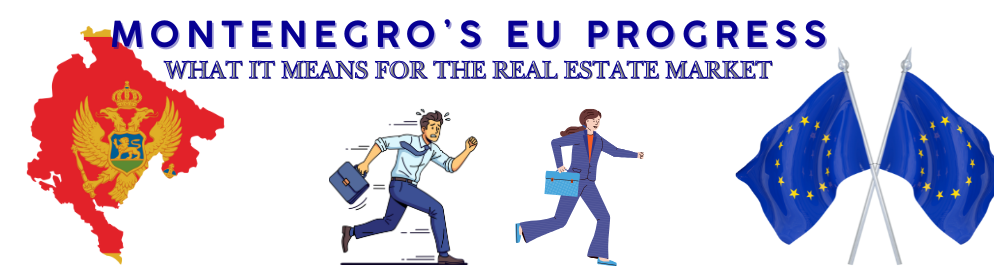
Montenegro continues to strengthen its position on the path toward European Union membership, reinforcing its reputation as one of the most promising emerging markets in Southeast Europe. In a recent milestone, Montenegro and the European Union provisionally closed five additional negotiation chapters, covering key areas such as the right of establishment, free movement of capital, company law, agriculture, and fisheries.
With these chapters provisionally closed, Montenegro has now completed 12 negotiation chapters in total, more than any other current EU candidate country. The European Commission has publicly stated that, if reforms continue at the current pace, negotiations could be finalized by the end of next year, opening the door for full EU membership as early as 2028.
This progress is not merely symbolic. EU accession is a structured, data-driven process that requires deep reforms across institutions, legislation, and market practices. Each closed chapter represents concrete alignment with EU standards — a factor that carries direct implications for investors, businesses, and, importantly, the real estate market.
Why EU Integration Matters for Real Estate in Montenegro
EU accession is often perceived as a political objective, but in practice it is a powerful economic catalyst. For the real estate sector, Montenegro’s EU path delivers tangible benefits that directly influence property values, transaction security, and long-term investment performance.
Greater Legal Certainty
One of the most important effects of EU integration is the harmonization of national laws with EU legislation (the acquis communautaire). This includes property rights, land registry systems, construction regulations, and dispute resolution mechanisms.
As Montenegro continues to modernize its legal framework, investors benefit from clearer rules, more consistent enforcement, and reduced legal ambiguity. A transparent and reliable legal environment lowers transactional risk, shortens due diligence processes, and increases buyer confidence — especially for foreign purchasers who prioritize regulatory clarity.
Stronger Investor Protection
EU-aligned company law and investment regulations enhance protection for both individual buyers and institutional investors. Stricter compliance standards, improved corporate governance, and clearer ownership structures help prevent irregularities and increase transparency in real estate transactions.
For the property market, this means safer off-plan investments, more reliable developers, and improved accountability across the sector. These reforms are particularly relevant for large-scale residential projects, mixed-use developments, and hospitality investments.
Easier Capital Movement
The provisional closure of chapters related to the free movement of capital is especially significant for real estate. Alignment with EU financial standards facilitates cross-border transactions, simplifies fund transfers, and improves access to international financing.
As capital movement becomes more streamlined, Montenegro becomes increasingly accessible to buyers from EU countries and beyond. This trend supports higher transaction volumes, greater market liquidity, and stronger demand in both residential and commercial segments.
Long-Term Market Stability
EU accession is closely linked to macroeconomic discipline, institutional stability, and predictable policy-making. These factors are essential for sustainable real estate growth.
Historically, countries that joined the EU experienced increased foreign direct investment, infrastructure development, and gradual appreciation of property values — particularly in capital cities, coastal regions, and tourism-driven markets. Montenegro, with its established tourism sector and limited coastal supply, is well positioned to follow a similar trajectory.
A Growing Opportunity for Property Investors
As Montenegro moves closer to EU membership, international interest in its real estate market continues to grow. Investors are drawn by a combination of factors: competitive entry prices compared to established EU markets, a favorable tax environment, strategic geographic location, and a high-quality Mediterranean lifestyle.
Residential properties, especially in coastal destinations such as Budva, Kotor, Tivat, and Herceg Novi, remain in strong demand. At the same time, commercial real estate, hospitality projects, and mixed-use developments are gaining attention as tourism numbers rise and infrastructure improves.
Importantly, Montenegro is currently in a pre-accession phase — a period that historically offers some of the strongest investment opportunities. Buyers who enter the market before full EU membership often benefit from value growth driven by increased demand, regulatory upgrades, and broader international recognition.
Looking Ahead
Montenegro’s EU integration is not just about meeting political benchmarks. It is about building a transparent, competitive, and investment-friendly environment that supports long-term economic growth.
For the real estate market, this process translates into stronger legal protection, improved market credibility, and rising investor confidence. As reforms continue and accession draws closer, Montenegro is increasingly positioning itself as a stable and attractive real estate destination within Europe.
For buyers and investors seeking long-term value, early market entry, and exposure to an emerging EU economy, Montenegro’s real estate sector represents a compelling opportunity at a pivotal moment in the country’s development.